8 March 2024
Mary Louise Madlangbayan
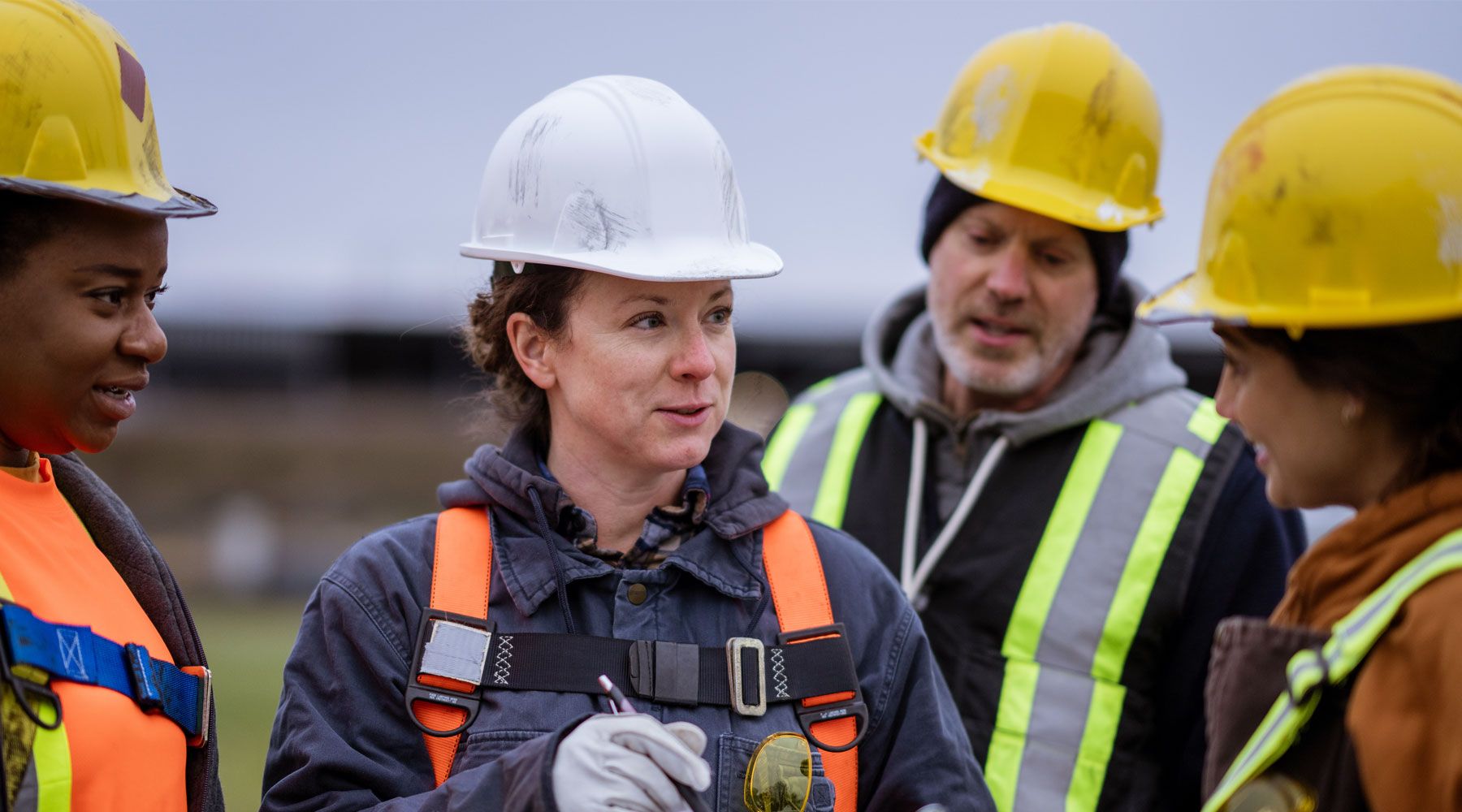
Despite long-standing perceptions, more and more women today are not only making strides but also reshaping the narrative of what it means to be a leader and innovator in the construction sector – paving the way for future generations of women in the field.
As the world celebrates International Women’s Day on the 8th of March, SmartCrete CRC, a for-impact Cooperative Research Centre (CRC) that invests in research and innovation to help transition concrete for a sustainable Australia, has reached out to four incredible women involved in its research collaborations who are passionate about advancing the concrete industry. Their stories show the transformative power of diversity and inclusion in an industry that is vital to global infrastructure and development.
 Embarking on her academic journey with a Master’s degree in Civil Engineering from the University of Technology Sydney (UTS), Indira Vasikova, a PhD Candidate and Research Assistant at the same institution, found her passion for concrete along the way. “It took me a while to find my way here. My interest in studying concrete arose when I began exploring its durability and asking questions about how we could ensure and maybe extend the service life of this widely used construction material,” Indira shared. “My ambition to pursue a career in the concrete industry is driven by a desire to contribute to more sustainable practices in the construction sector.”
 Similarly, Olivia Alexis, a Technical Product Specialist at Cement Australia who is also leading SmartCrete’s Community of Practice in Sustainable Concrete, found herself drawn to concrete as she delved into civil materials while studying Civil Engineering at the Queensland University of Technology. “I was just really keen to understand civil materials. And when I got into the industry, that was when I was exposed to concrete – and I just really enjoyed it,” she explained.
 The National Chair for the Concrete Institute of Australia Young Professionals Committee (CIA NexGEN) Marie Joshua Tapas, a materials engineer by profession, also shares her unexpected journey into the world of concrete. “Materials is a diverse field. The first PhD opportunity I got was in concrete materials, and that’s why I ended up working in the industry. It wasn’t something planned, but I think it was meant to be,” she added. And while she initially wanted an office job, Josh’s current role as a materials engineer at GHD requires her to go on-site and do fieldwork. “It’s both challenging and exciting. It’s actually a surprise that I love it. And if you want to make an impact materials-wise, then the concrete industry is the place to be.” Currently, Josh is also a visiting fellow at UTS, where she pursued her PhD in Civil Engineering (Materials).
 For Prof. Sujeeva Setunge, RMIT University’s Associate Deputy Vice Chancellor for Research and Innovation, the design of concrete structures is a subject that has always piqued her interest. “I was particularly drawn to how previous research had developed straightforward methods to navigate the material’s complexity, incorporating numerous approximations within design codes,” Sujeeva explained. Recognising the potential for further research to advance this field, she chose concrete research as the topic for her Ph.D. at Monash University. “I thoroughly enjoyed my time at the Civil Engineering lab at Monash University during my Ph.D. candidacy. It was a place where I truly felt a sense of belonging, engaging with fellow researchers and technical staff. The lab manager once mentioned that he would offer me a technical officer position anytime, which I saw as a compliment, considering I would have been the only female technical staff member at that time,” she concluded.
It comes as no surprise that being a woman in the concrete industry presents its own unique set of challenges. According to Indira, what helped her overcome these would be having the right mindset and a supportive environment. “In navigating the traditionally male-dominated landscape of the concrete industry, I prioritised surrounding myself with individuals who champion equal opportunities, regardless of gender,” she emphasised.
Meanwhile, Olivia mentioned how having people skills can be advantageous in a highly technical industry like concrete. “You need to have interpersonal skills. You can have all the technical knowledge, but you need to be able to communicate that to people.”
For Sujeeva, the support of fellow researchers and mentors during the early stages of her career has contributed immensely to her success juggling both work and motherhood. “Despite taking two career breaks for maternity leave, I was able to sustain my credentials in the field thanks to the collaborations I established. These connections proved invaluable in maintaining my involvement and relevance within the research community.”
Josh echoed similar sentiments, acknowledging the importance of having a good relationship with colleagues. She noted, “what gets you through is support from colleagues and acknowledging that you can never do it all.”
Despite the hurdles, Josh believes that women are starting to take up space in the concrete industry. “I’ve never felt that the concrete industry was unwelcoming to women. In fact, women are highly valued and appreciated,” she shared. “Now, we see the emergence of women’s branches within technical organisations such as Engineers Australia women’s branch and CIA Women In Concrete, among others.”
However, Josh underscores the importance of industry encouraging more young girls to explore engineering and concrete-related careers. “It’s crucial for the industry to foster interest and awareness among young girls as early as possible, even before university,” she emphasised. “By providing opportunities for education and exposure to these fields, we can inspire the next generation of female professionals to contribute to the industry’s growth and innovation.”
When asked about the initiatives she hopes to see in the industry to further support and advance women professionals like herself, Olivia also resonated with the idea of having specific groups for women in the industry. “Having more groups or even events where you’re able to see women at a certain level – that’s inspiring. It makes you think that if she can do that, I can do that too,” she concluded, highlighting the importance of visibility and representation in inspiring future generations of women in the field.
Meanwhile, Indira highlighted the need for more financial support and mentoring opportunities tailored specifically for students like herself who are interested in studying and researching concrete. “By providing such resources, we can empower more women to enter and excel in the industry, fostering a more diverse and inclusive environment that benefits us all,” she mentioned.
In a similar note, Sujeeva believes that the invaluable contributions of women in the concrete industry are essential to tackling future challenges in achieving a net-zero future without sacrificing economic benefits. “It’s crucial to recognise that these efforts to promote female contribution to the concrete industry are not solely for the sake of equity but also for the substantial business benefits they bring. Family-friendly, flexible workplaces empower women to manage periods of caregiving responsibilities, yielding substantial business benefits in the long term,” she asserted.
While more needs to be done to address existing barriers and foster greater inclusivity, it’s important to recognise the progress that has been made and the opportunities that exist within the concrete industry for women professionals. With concerted efforts and ongoing commitment to prioritise diversity, equity, and inclusion, the concrete industry can continue to evolve into a rewarding environment for women to thrive.

NewsArticles, General29 September 2026
SmartCrete CRC has submitted a response to the Federal Government’s 2026-27 Safeguard Mechanism Review. This review follows from 2023 reforms...

NewsArticles, Interview29 July 2026
Originally published in Consulting Matters The next chapter of concrete innovation won’t start with a technical solution or a miracle...

NewsArticles, Interview26 May 2026
Originally published in create (May 2026) The biggest barrier is often not invention but proving materials will perform safely for...

NewsArticles, Interview14 May 2026
Originally published in The Fifth Estate Without determined action, embodied carbon will soon balloon to 85 per cent of the...