Projects
Status
Complete
Partners
- University of Newcastle
- Delta Power & Energy
- Daracrete Pty Limited
- Molycop
- RMIT University
- Pacific Blue Metal
- Walter P & Gisela M Duber
- Ash Development Association of Australia
- Concrush
- Transport for NSW
Outputs
Videos
Publications
- Ali M Onaizi, Waiching Tang, Mugahed Amran, Yanju Liu, Umer Sajjad, Mohammad Alhassan. Towards increased adoption of furnace bottom ash as sustainable building materials: Characterization, standardization, and applications. Journal of Building Engineering. Volume 82, 1 April 2024, 108274. https://doi.org/10.1016/j.jobe.2023.108274
- Ali M Onaizi, Waiching Tang, Yanju Liu. Co-grinding treatment for developing integrated-properties SCMs from basic oxygen furnace slag and furnace bottom ash: A step toward synthesis advanced SCMs. Case Studies in Construction Materials. Volume 20, July 2024, e03163. https://doi.org/10.1016/j.cscm.2024.e03163
- Ali M Onaizi, Waiching Tang. Comparative assessment of the effects of furnace bottom ash and fly ash on mortar performance. E3S Web of Conferences. E3S Web of Conferences 546, 01010 (2024). https://doi.org/10.1051/e3sconf/202454601010
- Waiching Tang, Ali M Onaizi, Sagheer A Onaizi, Umer Sajjad, Yanju Liu. Integrated Use of Furnace Bottom Ash as Fine Aggregate and Cement Replacement for Sustainable Mortar Production. Materials 2024, 17(15), 3834. https://doi.org/10.3390/ma17153834
- Ali M. Onaizi, Waiching Tang, Umer Sajjad. Eco-Friendly Concrete with Ternary Binders involving GGBFS and Furnace Bottom Ash for Sustainable Construction and Pavement Applications. 2025 Conference.
- Ali M. Onaizi, Umer Sajjad, Amer Baras, Mugahed Amran, Mohammad Alhassand, Waiching Tang. Upcycling of furnace bottom ash as sustainable materials for low carbon concrete. Cleaner Materials. Volume 20, June 2026, 100400. https://doi.org/10.1016/j.clema.2026.100400
- Durability and Life Cycle Assessment of Sustainable Concrete Incorporating Furnace Bottom Ash and Ground Granulated Blast Furnace Slag. Under Preparation.
- Evaluation of Reactivity, Strength Development, and Hydration phase products of FBA–GGBFS Blends. Under Preparation.
Power plants generate 13 million tonnes of coal ash in Australia each year, comprising both fly ash and furnace bottom ash.
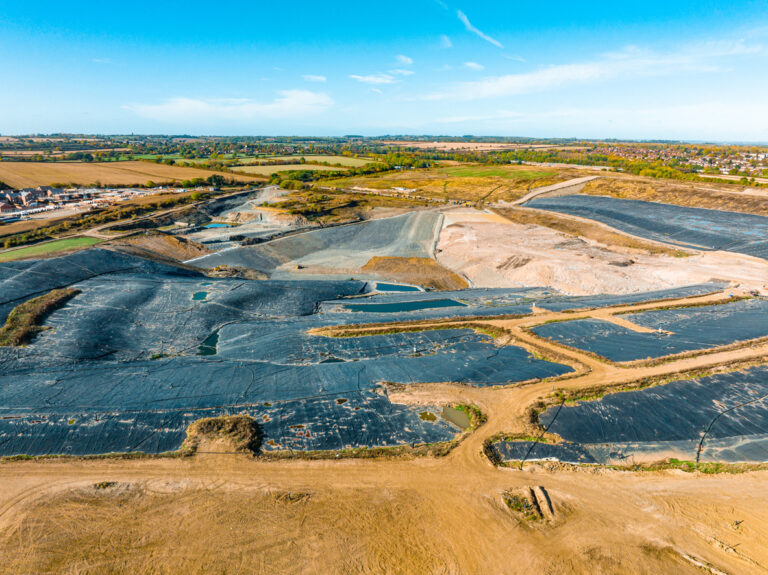
Power station operators in NSW have around 200 million tonnes of this ash stored in landfills, making it an underutilised resource and long-term management liability.
While fly ash is widely used in concrete to cut costs, improve durability and reduce carbon emissions, furnace bottom ash remains underutilised due to variability in particle size, lower reactivity, and higher water absorption.
By addressing these technical challenges, the concrete industry would be able to repurpose another high-volume industrial by-product to further reduce costs and emissions while also unlocking an alternative to its reliance on natural aggregates.
The project team succeeded in addressing the technical challenges of using furnace bottom ash in concrete by developing a pre-treatment protocol.
Co-grinding with ground granulated blast furnace slag enhanced reactivity without additional binder activation steps.
They developed several viable concrete mixes, with optimal mixes using furnace bottom ash as 25% fine aggregate replacement and 10–20% cement replacement, delivering 28-day strength of 31.3 MPa while maintaining low water absorption.
A mix like this was used to build a full-scale footpath at Vales Point Power Station, demonstrating real-world performance and compatibility with standard concrete batching, transport, placing and finishing.
It also demonstrated compliance with AS 1379 for concrete supply, TfNSW R53 for general works, and TfNSW R54 for footpath construction and general concrete paving.
The team produced guidelines to translate this project’s findings into clear, practical steps for sourcing, processing, proportioning, and validating furnace bottom ash concrete.
The guidelines, footpath and data demonstrate the practical viability of furnace bottom ash concrete as a new low-carbon construction material with clear potential for industry adoption.
The project’s life cycle assessment showed that the optimal furnace bottom ash mix reduced embodied carbon by 20–36% compared with a standard M20 mix, highlighting its sustainability potential.
For a mix using furnace bottom ash as 30% cement replacement, cost analysis demonstrated savings of $71–111 per cubic metre, with potential annual savings of approximately $5.0–7.8 million for a 70,000 m³ production volume.
With technical challenges addressed and viability demonstrated in the field, the focus now needs to shift to enabling commercial scalability.
To further develop furnace bottom ash as a concrete product, pre-treatment facilities would need to be established at power station sites to minimise transport costs and increase the material’s value at the point of origin.
Grinding and co-grinding operations would need to be integrated into existing cement manufacturing facilities or dedicated processing hubs where ball mills and operational expertise already exist.
Australian Standards for similar materials such as fly ash and slag would need to be reviewed to include furnace bottom ash or to support the development of a dedicated standard.