Projects
Status
Complete
Partners
- Victorian Department of Treasury and Finance (formerly The Office of Projects Victoria)
- University of Queensland
- Sustainability Victoria
Publications
- Vaca, A.A., Wang, Y., Xie, T. and Gravina, R. (2023). Life-Cycle assessment of sustainable concrete containing recycled waste materials. Concrete 2023 – The 31st Biennial National Conference of the Concrete Institute of Australia
- Mechanical and durability performance of waste-based concrete (In preparation)
- Life cycle assessment of waste-based concretes: a cradle to grave model (In preparation)
- Durability properties and regeneration capability of waste-based concretes (In preparation)
- Multi-functional unit-based life-cycle assessment of sustainable concrete containing recycled waste materials (PhD thesis in preparation)
Outputs
Videos
To produce concrete, aggregates and sand must be quarried from the environment.
But these finite resources are rapidly depleting and will not meet the forecast demand for concrete.
Producing concrete also requires the heating of limestone to make cement—a process that produces large amounts of greenhouse emissions unsustainable as the industry works towards its net-zero goals.
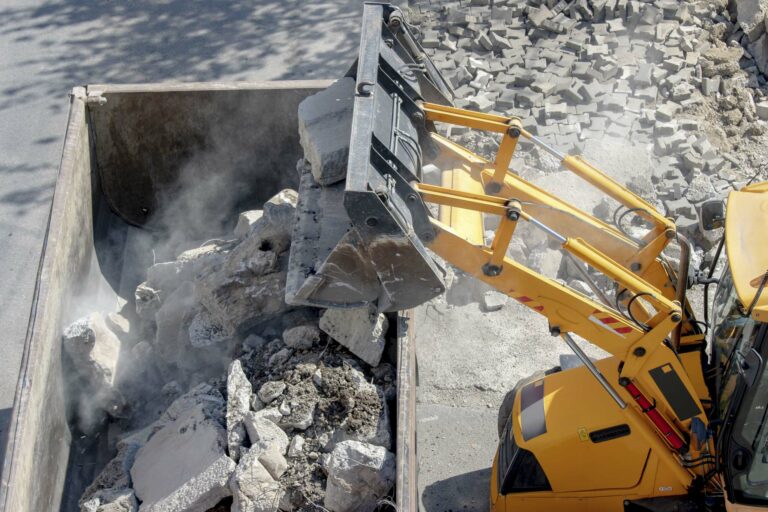
Meanwhile, large amounts of household and industrial waste go to landfill, disrupting and polluting natural environments and creating high costs to local authorities and the public who fund them.
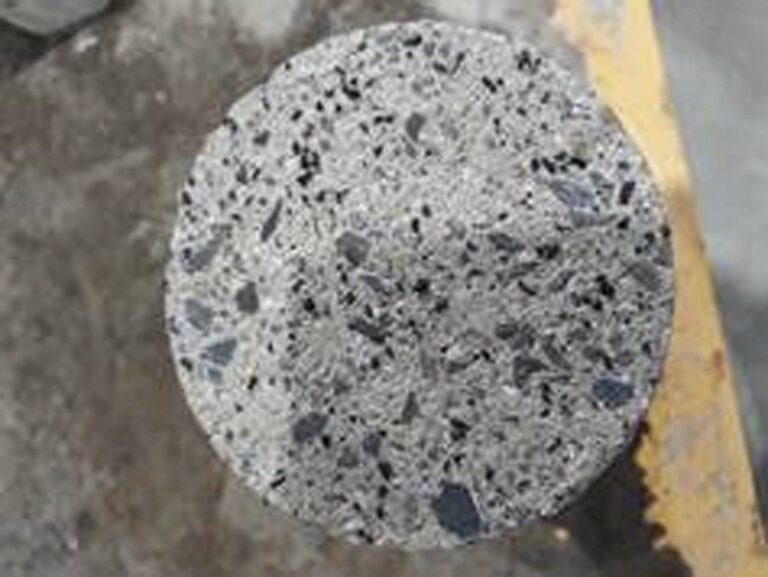
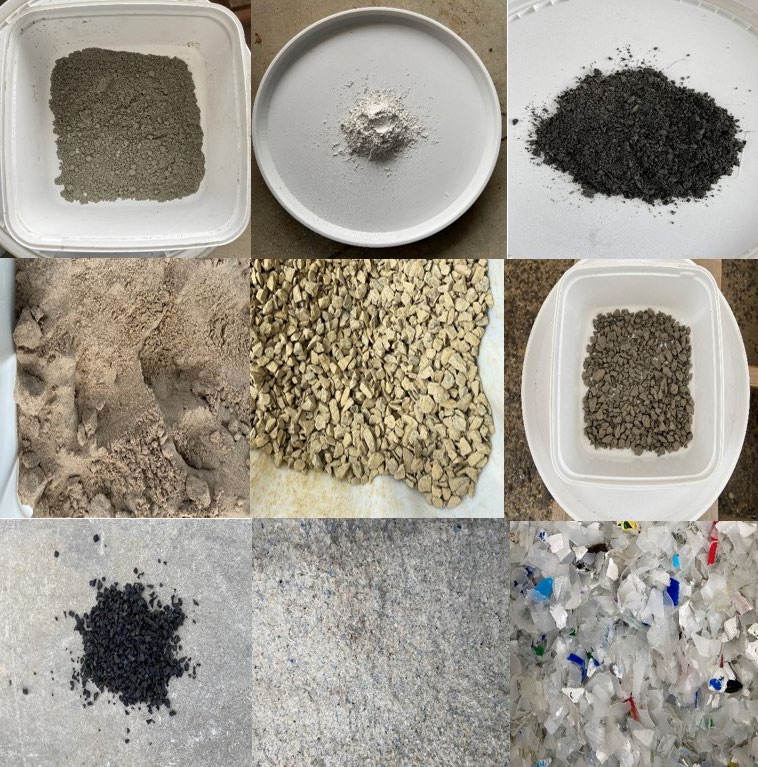
To address these social and environmental challenges, this project looked into using waste materials such as plastic, glass and rubber as partial substitutes for aggregates and cement in concrete.
Researchers designed the new concrete mixes using the recycled materials to meet the durability and mechanical standards for municipal council applications.
They demonstrated that 5 of the 6 mix designs tested in the laboratory performed comparably to traditional ordinary Portland cement concrete.
Two of these were developed with Hanson and used in a field trial to build a footpath on the Mornington Peninsula.
The mixes each achieved the 20% target reduction in embodied carbon and natural aggregate by weight.
The contractor’s visual inspections and feedback indicated that the concrete demonstrated good workability and achieved the required strength and durability, confirming suitability for municipal infrastructure applications.
Researchers also produced technical guidelines and a lifecycle assessment for contractors, asset owners, and regulatory bodies on how to specify for, and incorporate, recycled materials into concrete and meet Green Star ratings.
This project demonstrates the viability of sustainable alternatives to traditional concrete, providing concrete purchasers such as state government and municipal council engineers, designers and consultants alternatives to ordinary Portland cement concrete.
By adopting these materials, state and local governments would demonstrate leadership for industry to follow, helping to establish a new norm in sustainable material selection.
With broader uptake, the long-term impact would be more waste diverted from landfill, more natural aggregates conserved and reduced greenhouse gas emissions.
The cost analysis showed that recycled materials such as plastic and rubber are currently more expensive than traditional cement and aggregates but that these costs may reduce as demand for them increases.
This project also identified that further research is needed to address questions around potential environmental and health concerns related to soil contamination and microplastics.
Future research would also need to look into long-term durability under varying climatic and environmental conditions, pore characteristics, shrinkage and creep.