Projects
Status
Complete
Partners
- Hawks Excavation Pty Ltd (VIC)
- Stretford Civil Constructions Pty Ltd
- Swinburne University of Technology
Publications
- Lin, Y., Maghool, F., Arulrajah, A. and Horpibulsuk, S. (2023). “Alkali activation of recycledconcrete and aluminum salt slag aggregates for semi-rigid column inclusions”, Constructionand Building Materials, Vol. 366, 130106.
- Lin, Y., Maghool, F., Arulrajah, A. and Horpibulsuk, S. (2021). “Engineering characteristics andenvironmental risks of utilizing recycled aluminum salt slag and recycled concrete as asustainable geomaterial”, Sustainability, Vol. 13, 10633.
- Lin, Y., Maghool, F., Arulrajah, A. and Horpibulsuk, S. “Cleaner semi-rigid column inclusions containing recycled concrete aggregate stabilised by one-part geopolymer”. (In preparation)
Outputs
Videos
Overusing natural aggregates in construction has depleted reserves and driven up their cost.
The ground improvement industry needs more cost-effective and sustainable backfill materials for building stone columns.
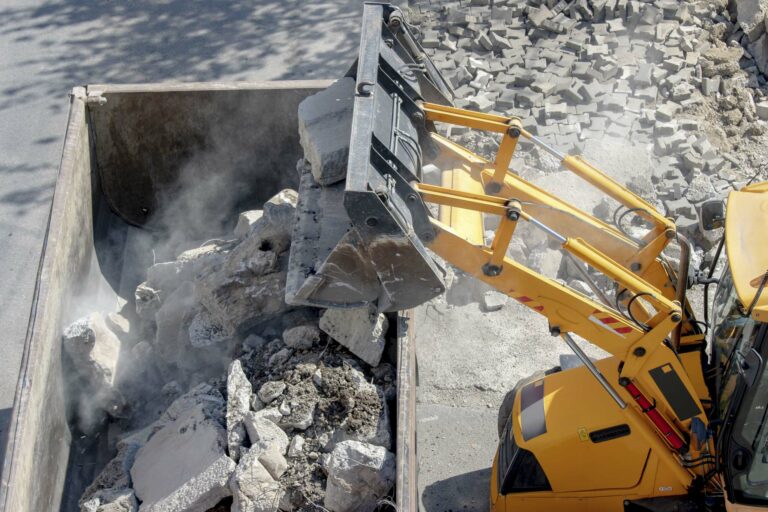
At the same time, Australia’s building industry produces around 30 million tonnes of construction and demolition (C&D) waste per year—almost 40% of our total national waste (DCCEEW).
Industry needs a sustainable solution to prevent this waste from going to landfill, for example, by processing concrete C&D waste into recycled concrete aggregate (RCA) for use in new projects.
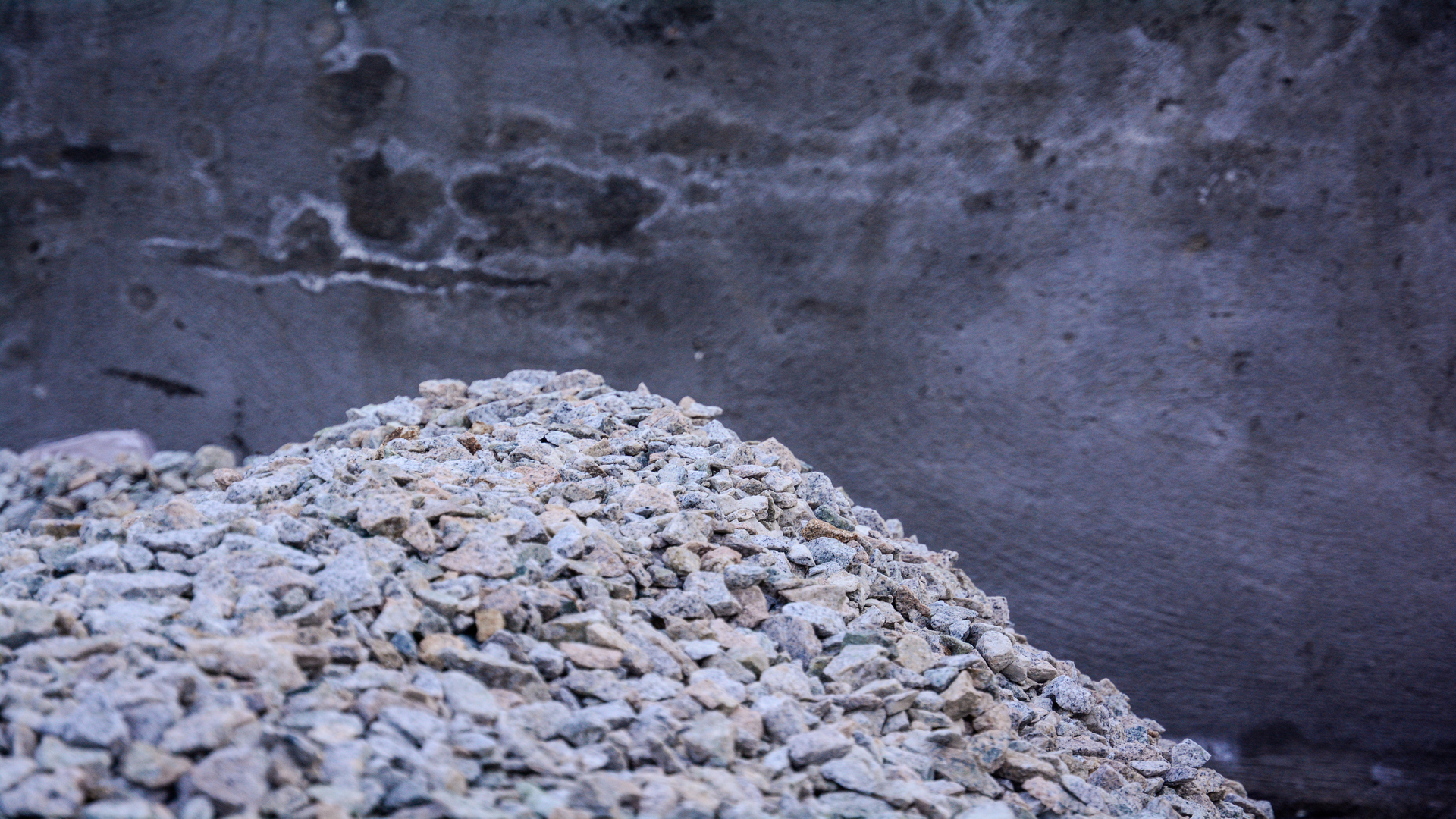
Hawks Excavation, Stretford Civil Construction, and Swinburne University of Technology collaborated on this project to turn RCA into ground improvement material.
Researchers found that the engineering and environmental properties of unbound RCA are comparable to natural aggregates and meet VicRoads specifications for ground inclusion columns and many other geotechnical applications.
They also developed lightly bound semi-rigid inclusion columns using low-carbon geopolymer binders and other industrial waste products such as fly ash and slag.
Researchers developed a fully instrumented prototype and demonstrated that it has comparable strength and drainage to current market offerings but with better durability, deforming much less over time.
With Australia’s population and building and infrastructure needs continuing to grow, using RCA in ground improvement applications offers a more cost-effective alternative to scarce and expensive natural aggregates.
Researchers found that RCA ($16/tonne) compared with natural aggregate stone quarry ($30/tonne) offers a 50% cost saving, which could translate to $1.1 million per kilometre for large infrastructure projects (Final Report).
Researchers also determined that using RCA instead of natural aggregate also reduces carbon emissions by about 65% (Final Report).
With greater uptake across industry, RCA as a ground improvement material would help improve resource recovery rates and contribute to Australia’s National Waste Policy goal of diverting 80% of waste from landfill.
More laboratory trials of RCA are needed to explore its potential for broader geotechnical applications.
The industry would also benefit from research into producing semi-rigid inclusion columns using a mix of RCA and other recovered C&D materials, such as glass and brick.