24 February 2025
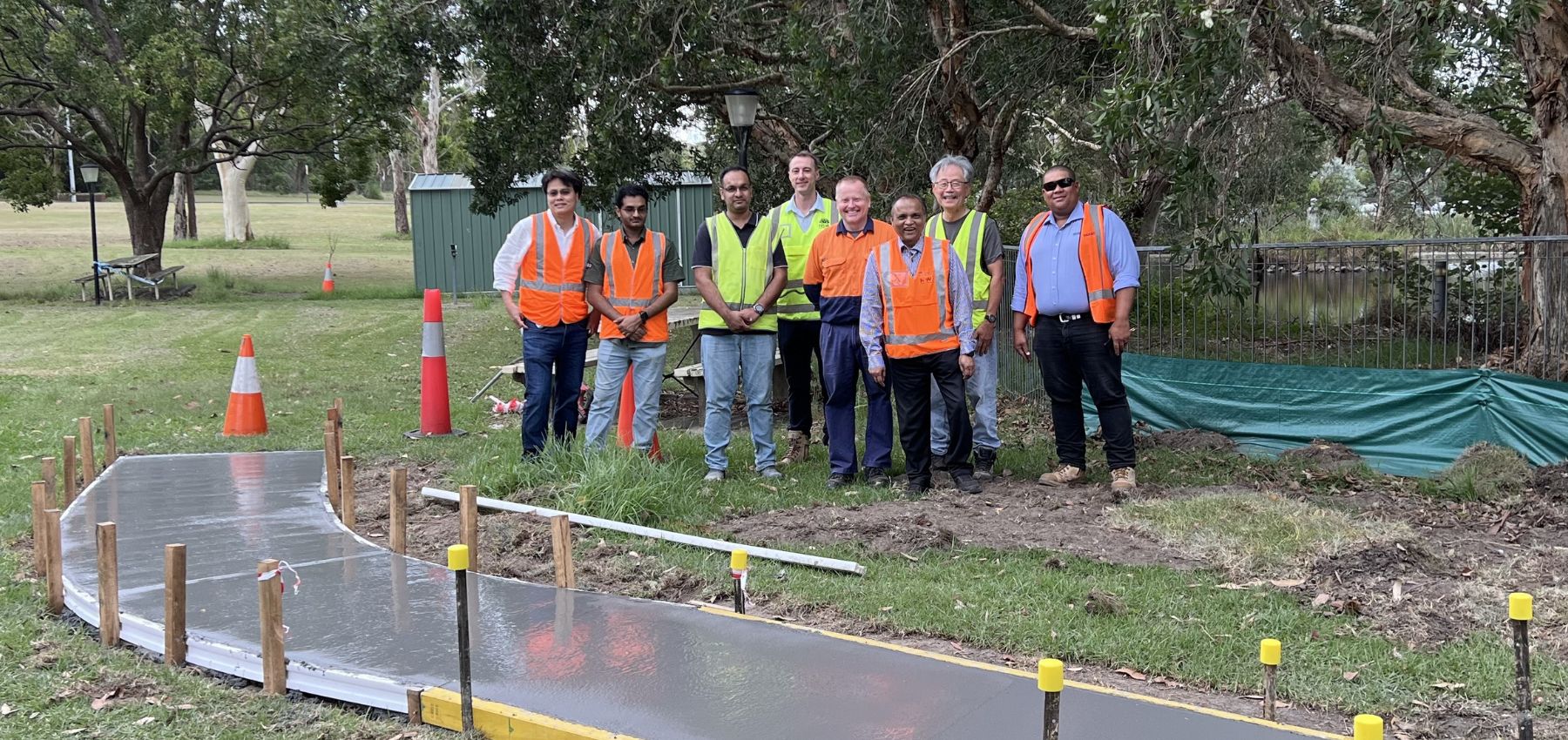
The group was made up of representatives from the University of Newcastle, Daracon, Delta Electricity and others, and they’d gathered to trial a new type of concrete in the application of a footpath.
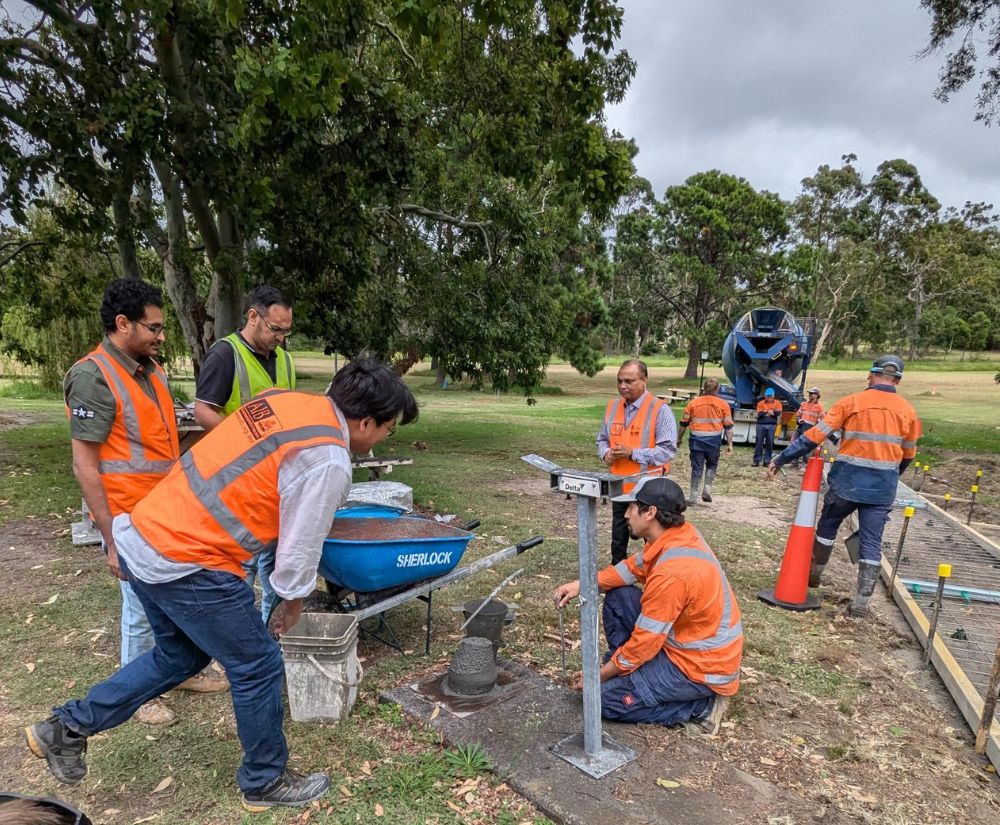
The new concrete is made using the industrial by-product coal bottom ash as supplementary cementitious material and partial sand replacement.
As a new eco-friendly product on the market, this concrete would divert waste from landfill, have a lower embodied carbon compared to traditional concrete, and reduce the need to source natural and finite sands.
It would also solve the problem of recycling coal bottom ash which, unlike the more commonly used fly ash, is limited to concrete for road base and subbase.
This product is being developed in the industry-led, Commonwealth co-funded project Eco-Friendly Concrete Using Industrial By-products.
The project is led by Professor Patrick Tang. Aside from the lead industry partners of Daracon and Delta Electricity, it’s supported by the Ash Development Association of Australia, Transport for NSW and others.
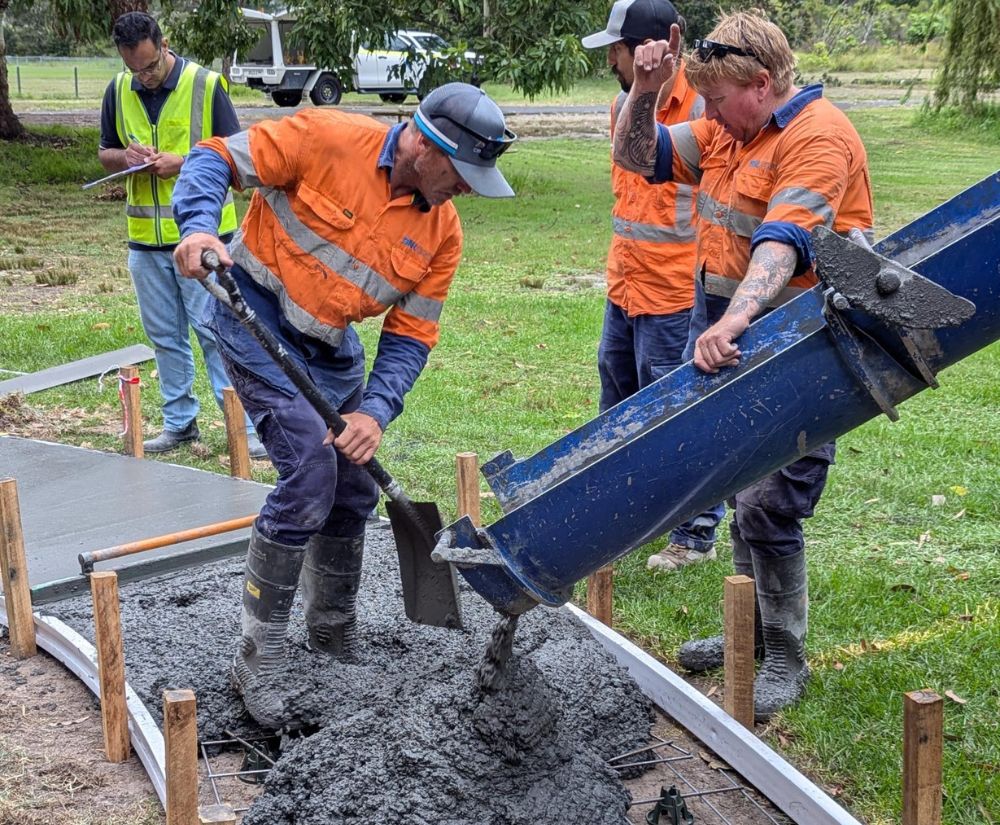
On Thursday 22 February, the project team poured the new concrete alongside a control mix of GP cement, each mix having a compressive strength of 25 MPa, a10-milimetre aggregate and 10-metre cast.
As they worked the fresh glistening concrete, the weather was perfect for natural curing—mild, with a shower 2 hours after completion.
The control mix was placed first in the mid-section of the path, with the test mix being placed next in the curved section of the path.
Both mixes were easily placed and finished with little slump loss.
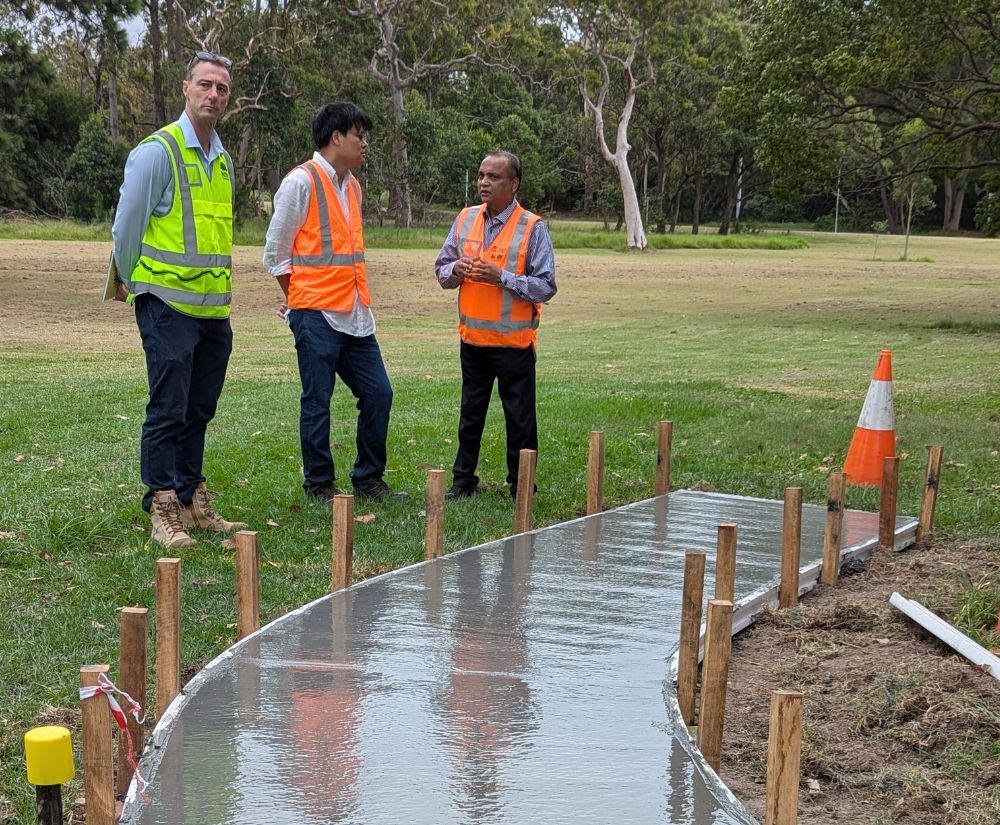
The test mix had more bleeding, as can be seen by the sheen in the photograph below. This can be a good characteristic for concrete placed on hot and windy days.
The test concrete also had a darker grey colour compared to the control due to the colour of the coal bottom ash—potentially a preferred colour for customers.
The team’s total observations recorded during the pour included:
Overall, the trial pour was accomplished with well-organised site preparation, concrete delivery, placing, finishing, sampling and testing.
The team also cast and cured samples on site to be transported the following day to the Civil Lab at the University of Newcastle for stripping, further curing, and testing.
They’ll gather data on the hardened samples’ density, compressive and flexural strengths, and drying shrinkage.
The team will produce a report summarising their observations, findings, and test results once all tests are completed.
We are looking forward to further developing this new concrete product and its specifications to meet Australian Standards.

NewsArticles, Interview29 July 2026
Originally published in Consulting Matters The next chapter of concrete innovation won’t start with a technical solution or a miracle...

NewsArticles, Interview26 May 2026
Originally published in create (May 2026) The biggest barrier is often not invention but proving materials will perform safely for...

NewsArticles, Interview14 May 2026
Originally published in The Fifth Estate Without determined action, embodied carbon will soon balloon to 85 per cent of the...

NewsArticles, General15 April 2026
Originally published at Rebuilt (13 April 2026) Concrete innovation is accelerating faster than most precast manufacturers realise. The science is...