Projects
Status
Complete
Partners
- Macquarie University
- Sydney Water
- Melbourne Water
Publications
- Dr Martin Ams, Dr Peter Dekker, Dr Paritosh Giri, Prof Michael Withford, Dr Shima Taheri and Prof Simon Clark, ‘Optical Fibre Sensors in Concrete Sewers’, presentation at the CCAA/SmartCrete CRC Pathways To Concrete Research Forum, 25th March 2022.
- M. Ams, P. Dekker, P. Giri, J. Gonzalez, T. Kuen, L. Vorreiter, H. Bustamante, and M. J. Withford, ‘Robust Optical Fibre Sensors for Harsh Wastewater Environments’, Paper in the 24th Australian Institute of Physics Congress, Adelaide Australia, 2022.
Downloadables
Videos
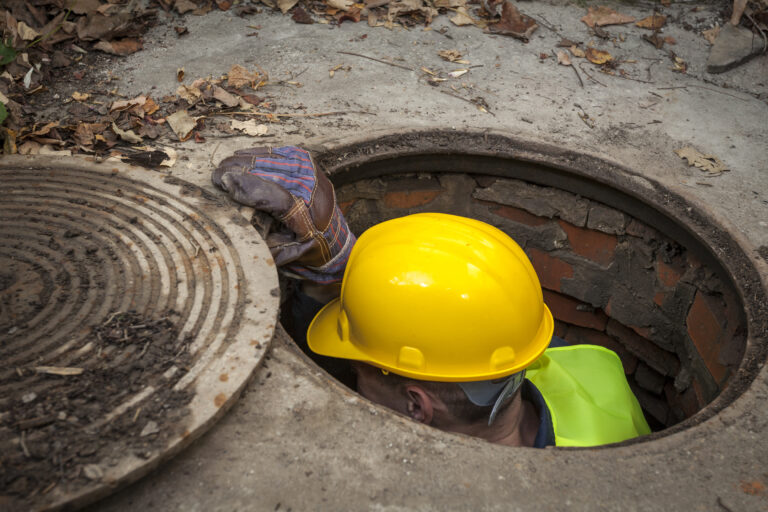
Concrete wastewater pipes contain microorganisms that convert hydrogen sulphide gas into sulphuric acid which attacks pipe walls.
This concrete corrosion causes millions of dollars of damage to sewer pipes across Australia and around the world each year.
Until recently, such corrosion damage has been monitored by sending workers into pipes and using electronic CCTV equipment.
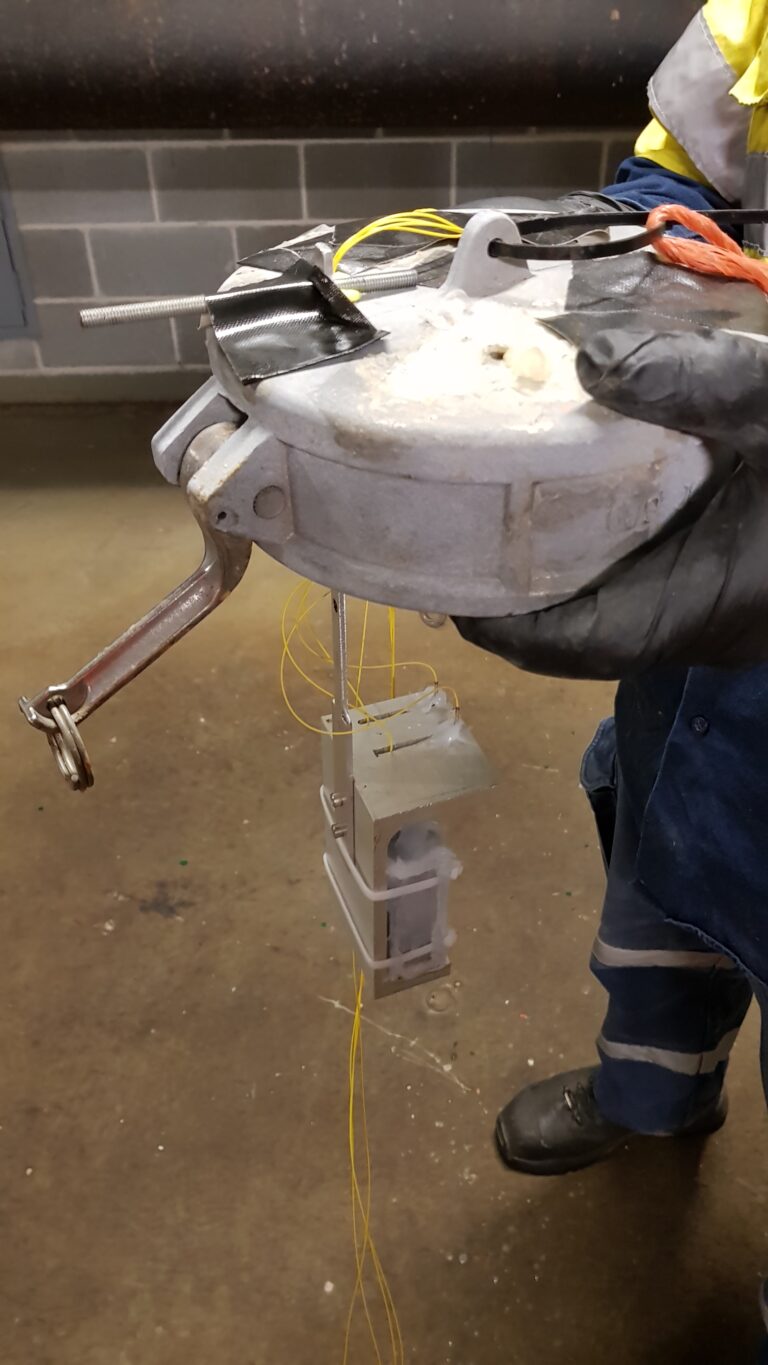
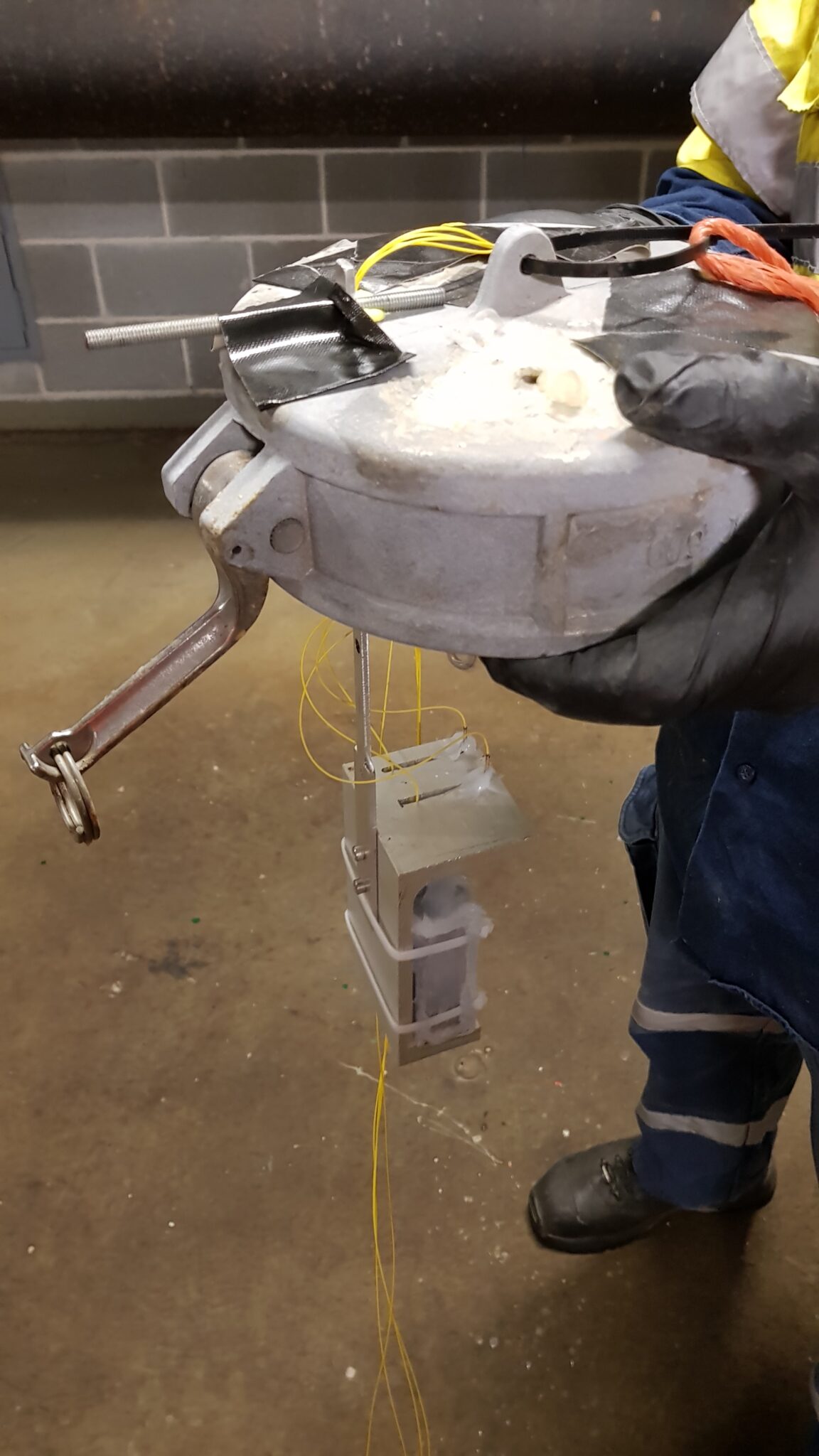
Previous research collaborations between Macquarie University, Sydney Water and Melbourne Water have developed photonic sensors made from optical fibres which detect signs of corrosion and last much longer than equivalent electrical sensors.
While these photonic sensors offer a much better solution for monitoring pipe conditions, they are not yet scalable because the devices used to gather data from the sensors—the interrogators—are expensive.
In this project, researchers at Macquarie University developed a new economical photonic sensor interrogator to go towards a complete photonic sensing platform with cloud-based internet of things capabilities.
The interrogator gathered data from various types of photonic sensors on corrosion predictors such as temperature and humidity.
The battery operated and energy efficient interrogator was tested in realistic field conditions at an outdoor Macquarie University site.
The interrogator collected real time sensor data that was accessed remotely.
It maintained accurate monitoring comparable to a commercial device over the 2 months of field-testing.
With its ability to transmit sensor data remotely, this technology allows asset owners to monitor pipes in hard to access and remote locations.
While the previous interrogator used for photonic sensing cost up to $60,000, the new interrogator developed in this project costs less than $6,000, providing a cost-effective solution that allows the scaling of photonic monitoring systems for sewer pipes.
If operationalised as part of a photonic sensing platform, the interrogator will help asset managers get much more detailed information about pipe conditions that can be used to perform targeted repairs and develop strategic maintenance plans. Sensor data can go towards advanced technologies such as machine learning and digital twins that provide predictive insights.
Over the long term, photonic sensing platforms have the potential to extend the life of existing infrastructure, reducing costs for infrastructure asset owners and the public.
Sydney Water and Melbourne Water will be able to further refine the photonic sensing platform and perform more field testing.
To operationalise the system, they will consider developing other aspects of this platform such as the technology for analysing and managing the data.
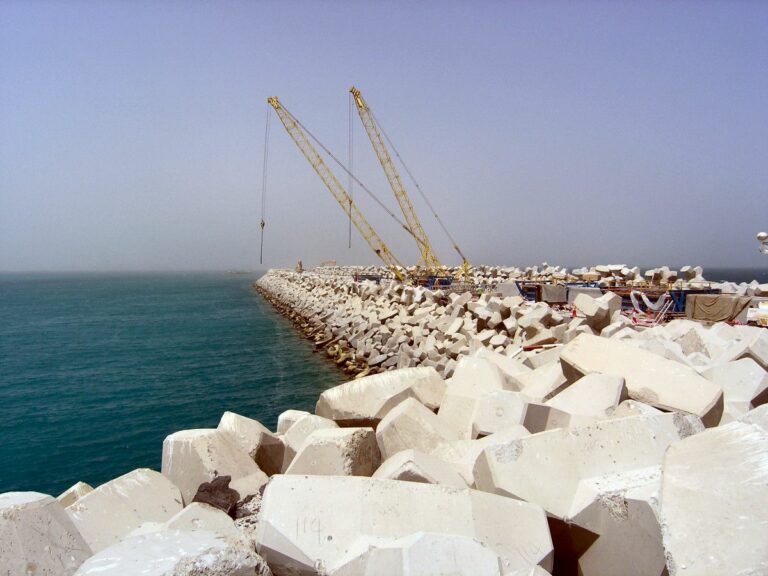
Researchers will continue to develop similar photonic sensing platforms for other asset management applications such as road pavements, concrete tunnels, marine walls and more.